How to Stop Construction Site Theft in New Zealand: A Practical Checklist for Builders
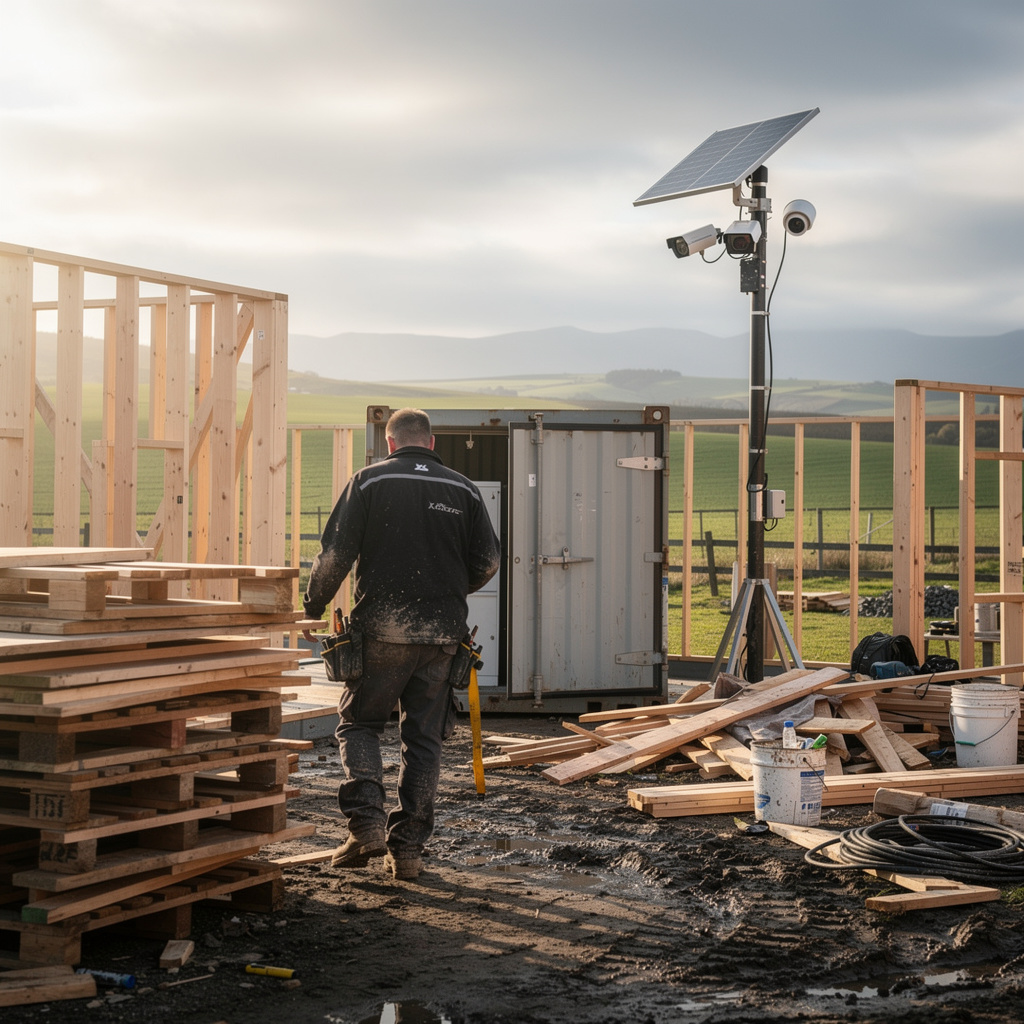
Tools gone from the container, copper pulled from a framed house, a trailer missing on Monday morning. Theft on building sites costs you twice: once for the gear, and again in the delays while you replace it and rebuild the schedule. Here's a practical, layered checklist for builders and developers across Canterbury, and where each layer actually fits.
Why one lock or one light is never enough
Most site theft isn't elaborate. It's opportunistic: an open gate, a dark corner, a ute that can back up to a stack of materials without anyone noticing. Each security measure covers one weakness and leaves others open.
The better approach is layers. Each one delays, deters or detects, and together they make your site a harder, slower and riskier job than the one down the road. That's our view from working with sites around Canterbury, and it's the thinking behind everything below.
No system stops every attempt. The aim is to make theft harder, make it more likely to be spotted, and shorten the time between something happening and you knowing about it.
Layer 1: Fencing and access control
Fencing sets the boundary and forces anyone entering to make a deliberate decision.
- Use secure temporary fencing with clamps fitted on the outside, so panels can't simply be lifted out or unclipped from inside.
- Keep gates to a minimum. One controlled entry point is easier to manage than three.
- Chain and lock gates every time you leave, even for a quick run to the merchant.
- Check the perimeter at the end of each day for gaps, loose panels or spots where the ground has been dug under.
- Think about vehicle access. Stacks of materials close to the road or an unfenced boundary are easy pickings.
Fencing is your delay layer. It won't stop a determined person, but it slows them and makes more noise doing it.
Layer 2: Lighting
Lighting works on two levels. It discourages people who don't want to be seen, and it gives cameras and passers-by something to see.
- Light the entry points, container doors and material storage first, not the whole site.
- Use motion-activated lights where mains power isn't practical, so a sudden light draws attention to movement.
- Avoid creating deep shadows behind containers or stacked product, which can give cover.
- Check lights during your end-of-day walk-round. A dead bulb on a Friday is an invitation for the weekend.
Be realistic about what lighting does. Lights on their own don't tell you anything is happening if nobody is around to notice. They work best paired with something that's watching.
Layer 3: Lockups and storage
If tools are the most common target, where you keep them matters more than almost anything else.
Site containers and gang boxes
- Choose a lockable container and fit a quality lock guard or shrouded padlock so bolt cutters can't reach the shackle.
- Position the container with the doors facing a wall, fence or another container so they're hard to access.
- Anchor large gang boxes to the slab or container floor where you can.
- Don't leave keys on site, and keep a note of who holds them.
Tool storage
- Take high-value power tools off site at the end of the day where practical, or lock them in the container rather than leaving them in a building.
- Keep a simple tool register with make, model and serial number, plus photos. It helps with reporting and recovery.
- Mark your tools with a permanent identifier such as your company name or a unique code, so they stand out if recovered.
- Keep cable, copper and fittings locked away as soon as they're delivered or roughed in. These are quick to carry and quick to sell.
Materials and deliveries
- Schedule deliveries close to when materials are needed, rather than letting product sit for days.
- Get things off the kerb and inside the fence line the same day.
- Record what arrives, so shortages show up quickly instead of weeks later.
Layer 4: Remote monitoring
This is the layer that closes the gap the others leave. Fences, lights and locks work passively. Remote monitoring tells you something is happening, while it's happening.
A Sentry Tower is a solar powered unit that sits on your site and provides 24/7 monitoring. AI monitoring watches the site for people and vehicles in the places and times they shouldn't be, and sends instant alerts so you or your site manager can act. You get remote access from any device, so you can check the site from home, the office or another job.
A few things to think about with any remote site surveillance:
- Placement matters. Cover the entry points, container and highest-value storage first.
- Solar power means no hunting for a power supply, which suits new subdivisions and early-stage sites without services connected.
- Decide who gets the alerts and what happens when one comes through. An alert nobody acts on is no use.
- Use the footage. Live access and recorded clips also help with reporting an incident or settling a dispute about what happened on site.
Where each layer fits
| Layer | What it does | Best at | Weak spot |
|---|---|---|---|
| Fencing | Delays and defines the boundary | Slowing entry | Doesn't alert anyone |
| Lighting | Deters and improves visibility | Entry points, containers | Needs someone watching |
| Lockups and tool storage | Protects the actual gear | High-value tools, cable | Only protects what's inside |
| Remote monitoring | Detects and alerts in real time | After hours and weekends | Needs a plan for responding |
The end-of-day checklist
Print this and keep it in the site office or the ute.
- Gates closed, chained and locked.
- Fence panels checked and clamped.
- Lights working and sensors clear.
- Tools in the container or taken off site.
- Cable, copper and fittings locked away.
- Container locks shrouded, keys accounted for.
- Deliveries inside the fence line and recorded.
- Remote monitoring on, and alerts going to the right people.
If something does go missing
Report it to NZ Police promptly. Call 111 if a crime is in progress, or 105 to report one after the fact. Have your tool register, serial numbers and any footage ready. For questions about your insurance cover and what it requires on site, speak to your insurer or broker.
General information only - contact us for a site-specific quote.
Frequently asked questions
What's the single most effective way to stop construction site theft?
There isn't one. Fencing, lighting, locked storage and monitoring each cover a different weakness, so the combination does the work. If you have to start somewhere, secure your tools and high-value materials first, then add detection so you know when something's wrong.
Do I still need a Sentry Tower if I have a fence and lights?
Fences and lights deter and delay, but they don't tell you when someone is on site. A Sentry Tower adds 24/7 monitoring with instant alerts, so you find out as it happens instead of the next morning. Whether it suits your site depends on size, layout and risk, so it's worth talking it through.
Can remote site surveillance work on a site without power?
Yes. Sentry Towers are solar powered, so they don't rely on a mains connection. That makes them practical for early-stage builds, subdivisions and sites where services aren't connected yet.
Talk to us about your site
Every Canterbury site is different, from a single new build to a multi-stage development. If you want to work through which layers make sense for yours, get in touch with the SentryAI team and we'll talk it through with you.