Using Construction Timelapse to Track Progress, Settle Disputes and Market Your Build
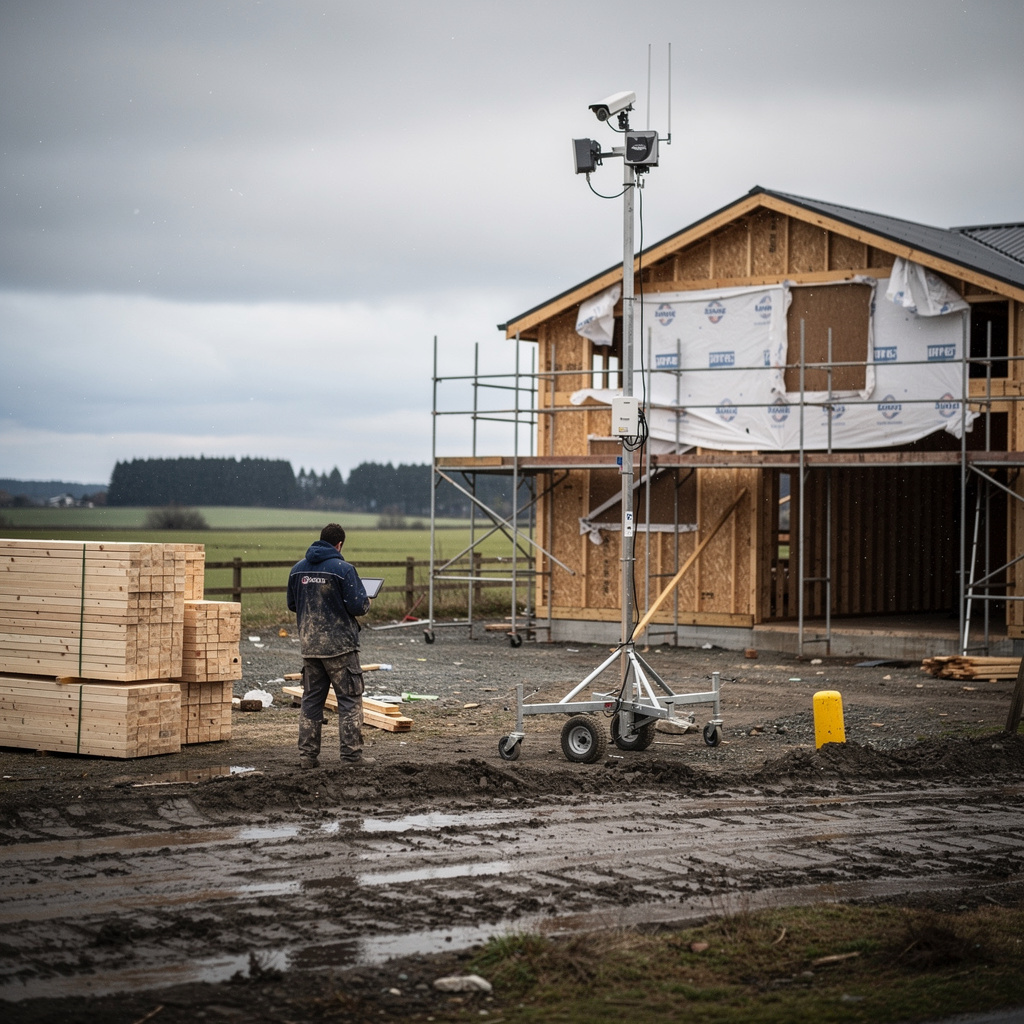
Clients ring asking when the frame will be finished. A sub says the slab wasn't ready when they turned up. A neighbour says work started early. You weren't there for any of it, and memory is a poor witness. A construction timelapse gives you a dated, visual record of what actually happened on site.
Most builders think of timelapse as a marketing extra. We see it as a working tool first and a marketing tool second. Here's how to get value out of it.
What a construction timelapse actually is
A fixed camera takes images at set intervals from the same position, day after day. Those images are stitched into a short video, or kept as a browsable archive you can scrub through by date and time.
The fixed position is what makes it useful. Because the view never changes, you can compare Tuesday with the Tuesday before and see what moved.
If your site already has a Sentry Tower running site surveillance, the camera is already watching the build around the clock. Ask us how timelapse footage can be pulled from it for your project.
1. Tracking progress without being on site
If you run more than one job, you can't be at every one. Remote access to a live view and a progress archive means you can check a site from the ute, the office or home.
Practical ways builders and developers use it:
- Check trade sequencing. Did the framers finish before the roofers arrived? Did the pour happen on the day planned?
- Spot delays early. If nothing has changed on site for three days, you'll see it in the footage and can chase it up.
- Review weather impact. Canterbury weather can swing from nor'wester to frost in a week. A record of wet or windy days helps you explain lost time with something better than "it rained a bit".
- Support your programme. Footage next to your build programme shows where you're ahead, on track or behind.
2. Client updates that save you phone calls
Owners and investors want to know their money is turning into a building. Most don't want a site visit in hi-vis and gumboots, and many live out of town or overseas.
A short timelapse clip sent fortnightly or at each stage does a lot of work:
- Pick milestones: foundations, frame, roof on, lock-up, cladding, linings, handover.
- Send a short clip or two or three comparison images, not a hundred photos.
- Add a line or two on what's next and anything that could affect timing.
Clients who can see progress tend to ring less. They also see the delays you've already flagged in context, rather than hearing about them second-hand.
For developers reporting to funders or partners, a dated visual record sits well alongside your normal progress claims and reports. What your lender or partners require is a matter for you and them.
3. Settling "who did what, and when" questions
This is where timelapse earns its keep. Site disputes are usually about timing and sequence:
- Was the area accessible when the sub arrived?
- When was the damage done, and who was on site that day?
- Did the delivery turn up when the supplier says it did?
- Was the work at that stage when the claim was made?
Dated footage won't answer everything, and it won't cover every angle. But it gives everyone a factual starting point instead of a one-word-against-another argument. In our experience, a calm conversation that begins with "let's look at the footage" usually goes better than one that starts with accusations.
A few cautions:
- Footage is a record, not a verdict. Whether it carries weight in a contract dispute is a question for a lawyer, not for us or your camera provider.
- Keep the archive intact. Don't trim or edit the originals. Make your client clips from copies.
- Know your contracts. Talk to a qualified adviser about how footage fits with your contracts, insurance and any claims process.
4. Marketing your build
The same footage you use for records makes strong marketing, and it costs you very little extra to use it.
- Website and portfolio. A 30-second timelapse from bare section to finished home tells a story photos can't.
- Social media. Short clips work well. Post stage milestones during the build, then the full sequence at handover.
- Sales and pre-sales for developers. Show buyers and prospective investors that work is moving, week by week.
- Tender and quote packs. A clip of a past project shows prospective clients how you run a site.
- Recruitment. Good builders want to work for crews who look organised.
Before you publish anything, get your client's agreement to use footage of their home. Many builders put this in the contract at the start. Check with your own adviser on wording.
Privacy and neighbours
Cameras on construction sites can catch workers, neighbours and passers-by. Under the Privacy Act 2020 you need to be thoughtful about what you collect and how you use it.
- Make sure your crew and subs know the site has cameras.
- Use signage at the entrance.
- Angle cameras at the site, not into neighbouring windows or yards.
- Check faces and vehicle details before posting anything publicly.
If you're unsure, the Office of the Privacy Commissioner publishes guidance, and your lawyer can advise on your specific situation.
Getting the best timelapse from your site
A few decisions at the start make a big difference:
- Place the camera early. The most valuable shots are the ones from the first dig. You can't go back and capture the foundations later.
- Choose a wide, high view. You want to see the whole footprint, access and neighbouring boundaries if you can.
- Think about the sun. In Canterbury, a camera that looks into low winter sun will give you glare. Consider which way it faces.
- Keep the lens clean and the view clear. Skip piling stock in front of it.
- Back it up. Save milestone clips and key dates off the platform too.
Because Sentry Towers are solar powered, they can go where mains power isn't yet connected, which is often exactly the situation at the start of a build. Camera positioning for your site is something we can talk through with you.
General information only - contact us for a site-specific quote.
Frequently asked questions
Can I use timelapse footage as evidence in a dispute?
It can help establish what happened and when, and it's a good starting point for conversations with clients and subcontractors. Whether it's accepted in a formal process depends on the circumstances, so talk to a lawyer or qualified adviser if a dispute is serious.
Do I need my client's permission to use timelapse for marketing?
You should get it. It's their home or their development, and they may not want it shared. Many builders cover this in the contract or ask in writing before posting. Check the wording with your own adviser.
Can the same camera do security and timelapse?
Often, yes. A Sentry Tower provides 24/7 monitoring with AI monitoring and instant alerts, and the footage it captures can also serve as a progress record. Contact us to talk through how that would work on your site.
Talk to us about your site
If you're running a build in Canterbury and want a clear picture of progress, whether for your clients, your records or your marketing, get in touch. We'll talk through your site, where a Sentry Tower would sit and what you'd get out of the footage.